
Preserving our Heritage with Remarkable Restorations
Porches were once a standard element on many Canadian homes because they enabled the occupants to enjoy sitting outdoors, while fully protected from the elements.
Now they are making a comeback of sorts; not that they ever entirely disappeared but there has been a revival and a renewed interest in this architectural and artistic feature on century homes in the Orangeville area.
Leading that revival – other than the owners themselves – is Mono Township resident James Hope, principal of Jas. F. Hope Construction Limited. A full “turnkey” residential and commercial contracting firm which handles almost every aspect of building restoration/ repair/renovation, the company added porch design and construction to its list of services in the past few years.
However, the porches are not isolated “one offs,” says Hope.
“Porches are only a part of our heritage restoration work and are almost always a component of a larger project which includes erecting historical facades and interior restoration.”
An example of the heritage facade work is the restoration of signature elements such as mouldings and cornices, he explains.
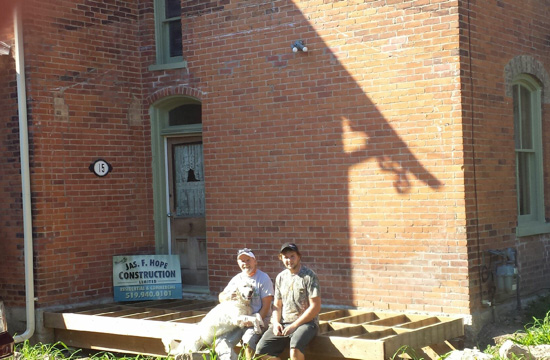
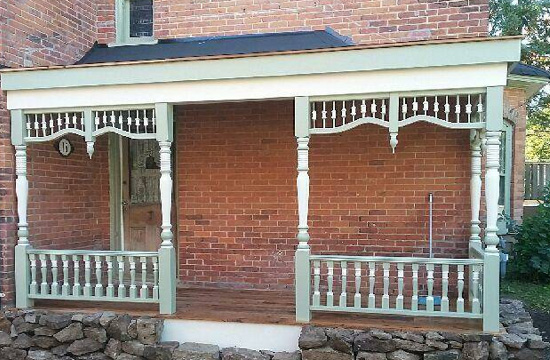
Included in the company’s portfolio of projects was the restoration of a home on Bythia Street, which garnered the owner the Town of Orangeville’s first heritage award, and a second house just a few blocks away on York Street, also received a heritage award.
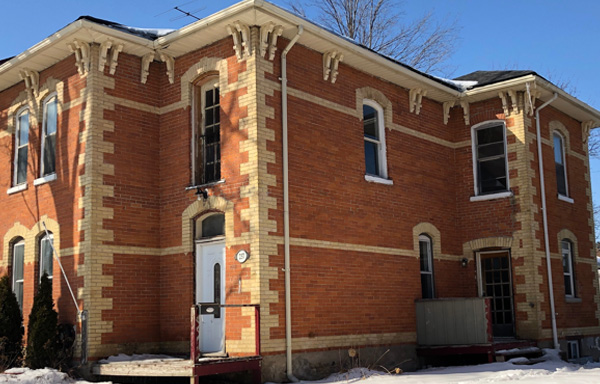
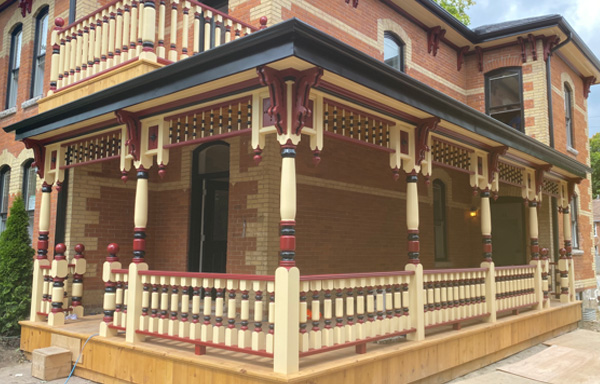
Another exterior restoration/porch project is the “porch house” an 1880 Victorian-style home at 237 Broadway Avenue, (the town’s main business street) that was transformed into a three-unit residential apartment building a few years ago by local insurance and financial services adviser Roy Chopp.
The wraparound porch, which was erected in 2020 includes a small second level sitting area and has been attracting a lot of attention from passersby taking photographs, says Chopp, who installed a wall plaque acknowledging the project was undertaken by Jas. F. Hope Construction.
Communities and towns across Canada probably lost between 65 to 80 per cent of heritage houses and other structures during the 1960s, 70s, and 80s, says Hope.
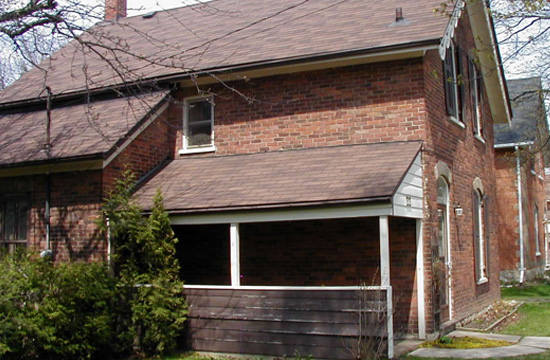
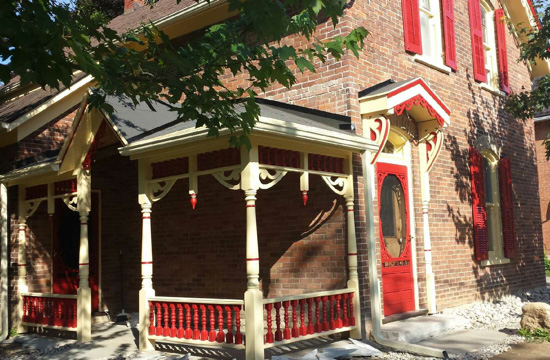
Those that remained were left mostly untouched up until about mid-1980s and 1990s when owners started investing money to make them beautiful again,” says Hope, whose roots in the construction/restoration business extend very deep. The company is named after his father, James F., who started it in 1954.
When he was 19, Hope obtained a position teaching underprivileged youth to perform repairs on senior citizen homes in Toronto under a federal government program. That lasted for two years until funding for the program ended. After an 18-month period managing CN’s rail terminal in Concord, Hope purchased the business from his father in 1983.
“I was getting referrals from the federal government,” he says, in recalling how his business managed to grow and evolve based on his earlier work for the government.
At that time, the company was based in Toronto. But in 1993 he moved to Mono Township because he wanted his children to grow up in a small-town environment. A few years later he began restoring the facades on the businesses along Broadway and it was that side of the business – which continues to this day – which eventually sparked requests by century homeowners who were interested in porches, he says.
There are any number of reasons why an owner wants a porch, such as creating curb appeal, adding functionality, or simply beautifying the homes, he says.
Most clients usually only have a vague idea of what they want in a porch, says Hope, who has to interpret what they have relayed to him in meetings and then create a design.
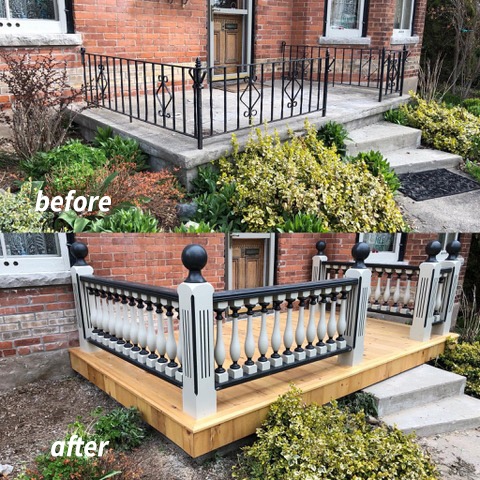
A number of issues have to be taken into account such as the brick colour, the location and maintenance of the house, and potential maintenance problems.
“What are the customer’s needs? If there are seniors living in the house, will the porch interfere or hinder their movements?”
Other factors which have to be assessed include the location of the entranceway, the downspouts, and utility lines and, in the case of a covered two-level porch, whether it will align or interfere with the second floor windows, he says.
There are “hours and hours” of details that have to be worked out, as the design evolves from rough concepts to a finished design to the owner for final approval.
“But some owners just say ‘build me a nice porch’.”
The over-all design is undertaken by Hope, but with input from his five-member crew, which includes his eldest son James, who will eventually inherit the business. The other members are Jesse, Barry, Patrick, and Cameron.
“We have a great group of workers who are very talented, and we all work together. I couldn’t do it (the projects) without them,” says Hope, in emphasizing their skills and talents.
The porches are comprised of an array of components, such as decorative newel posts, pickets, and other “turnings” which are designed by Hope with the collaboration of the manufacturer.
Depending on the structural and painting details, the onsite construction can take anywhere from 3 to 4 weeks to several months to complete. Even then, design often continues as there may be style or colour changes that have to be made, he says.
Of course, building the porch and completing the heritage face improvements has to be conducted in non-winter months and, once a project commences, the company stays focused on that particular project and doesn’t skip from one job to another, says Hope.
As the company deals exclusively in wood, the porches it erects will require maintenance at some point in the future and that is something home and commercial building owners need to be aware of, he points out.
Still, that hasn’t deterred a growing niche market in the porch sector and, from the positive feedback he has received, the owners are making practical use of them.
“My customers have told me they are sitting out on their porches.”
Asked what has been his most challenging assignment, he says they all have different challenges – “which I love”.
For the individual homeowner, porches increase the value and functionality of the house and provide satisfaction. But those benefits extend into the wider community and when homeowners started adding them, such as is now occurring in Orangeville, it makes streetscapes more attractive which, in turn, draws tourists and generates business for restaurants and other local retailers, says Hope.
WRITTEN BY: DAN O’REILLY | RESOURCES: JAS F. HOPE CONSTRUCTION LTD.