
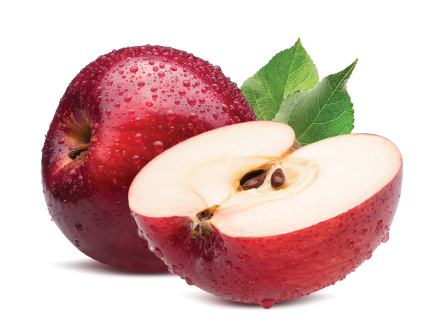
Pectin is a type of fibre found in the cell walls of plants that helps to give the plants their structure. Apple pectin is extracted from apples which are some of the richest sources of the fibre, with about 20% of the apple pulp being pectin. Most people recognise pectin as an essential ingredient in making preserves, jams and jellies allowing them to gel. Pectin was discovered in 1825 by French chemist Henry Braconnot. Chemically speaking pectin is a complex three-dimensional structure of many polysaccharides but the exact chemical composition is not yet known as the molecule is so complex.
The body cannot directly digest pectin but the bacteria in our gut breaks the long chain structure into smaller pieces and thus making it more useful and allows for absorption. The long chain polymers of pectin remain in the gut region, but the smaller fragments can enter the blood stream and so be available for the wider use of clinical conditions. Being indigestible in the stomach, as the enzymes cannot break it down, pectin can be used to coat other medications that need to bypass the stomach and be delivered to the colon without being rendered ineffective by stomach acid.
In the gut apple pectin has been shown in studies to be an effective anti-diarrhea agent and as a water-soluble fibre it has the gel forming effect. It is considered a prebiotic promoting the growth of normal intestinal flora, but it also inhibits the growth of harmful bacteria which often cause diarrhea in the first place, such as Salmonella, Shigella, Enterobacter and Citrobacter. It can also help with constipation as its water absorption abilities increase the volume and viscosity of the stool.
Pectin also has the ability to “trap” different molecules within its matrix and carry them through the body to be excreted. Apple pectin binds and removes cholesterol before it is absorbed and escort it out. Studies have shown it to absorb 90% of the total dietary cholesterol better than the synthetic drug cholestyramine. It also prevents reabsorption of cholesterol that is released into the intestine via the bile. “Gonzalez M et al. Effect of orange and apple pectin on cholesterol in serum, liver and feces. J Physiol Biochem. 1998.” By decreasing both total cholesterol and LDL cholesterol levels it improves the fat profile levels, hence lowering the risk of arteriosclerosis, heart problems strokes and diabetes.
The gel forming properties of pectin cause a delay in gastric emptying and the thick gel that forms also impedes intestinal absorption of sugars and so lowering insulin levels and improving glucose metabolism, allowing more glucose to be excreted in the urine.
Apple pectin is particularly effective in cases of colitis. Colitis is a condition of inflammation of the colon that can develop into ulcerative colitis and possibly colon cancer if not addressed. Studies have shown that apple pectin reduces inflammation and free radical damage and improves the mucus membrane protecting the gut wall “Liu L et al. An apple oligogalactan prevents inflammation and carcinogenesis by targeting /LPS/TLR4/NF-kB pathway in a mouse model of colitis-associated colon cancer. Carcinogenesis. 2010. “This protection is effective for both colitis and colon cancer. A major metabolite of pectin is butyrate which is the main energy source for colon cells. It is a strong anti-inflammatory by inhibiting the activation of the inflammation signaling mechanism.
An extremely important discovery was made after the “Chernobyl accident” in1986 at a nuclear power station in Ukraine. Apple pectin was found to be effective in reducing the levels of radiation in the body. Children affected by the disaster receiving the apple pectin were found to have a 63.6% reduction in radiation levels of Cesium 137 after one month even though Cesium 137 has a half-life of 30.03 years. “Nesterenko VB et al. Reducing the 137Cs-load in the organism of “Chernobyl children with apple-pectin. Swiss Med Wkly. 2004.” Equally important pectin not only reduces radiation but it has been shown that pectin entering the blood stream can increase the elimination of toxic metals. “Eliaz I et al. The effect of modified citrus pectin on urinary excretion of toxic elements. Phytother Res 2006.” This study showed the increase in, urinary excretion of arsenic, cadmium and lead in six days was 130%, 150% and 560% excess fibrosis of respectively. Other studies have shown that body electrolyte levels of sodium, potassium, chloride, calcium, and magnesium are not adversely affected by the consumption of apple pectin. {see Dr. Eliaz wellness report on pectin}.
Galactin-3 is a carbohydrate-binding protein i.e., a lectin. Recent research shows that it is associated with inflammation, fibrosis, heart disease, stroke, cancer, and other diseases. Pectins can bind and block this lectin. They can also suppress the pro-inflammatory response of activated immune cells and inhibit other enzymes that can trigger excess and nitric oxide and COX2 which are involved with inflammation. Galactin-3 is connected to excess fibrosis of vascular, cardiac renal and lung systems which can lead to serious complications with these organs. Obesity raises galactin-3 levels which trigger inflammation in the cardiovascular system resulting in stiffening of the left ventricle in the heart and cause fluid to leak into the lung. In animal studies pectin has blocked the galactin-3 associated with causing renal fibrosis and inflammation and may prove to be a new method of reducing kidney injury.
It is well known that pectin has anti-cancer activities. It interferes with the growth of breast cancer and multiple myeloma i.e., cancer of the antibody producing cells, colon cancer and prostate cancer. In animal studies it has also been shown to reduce the metastasis of aggressive melanoma in the lungs, prostate, breast, or colon tumors.
In conclusion it would seem there is a growing field of evidence that there are many conditions that can be somewhat alleviated by the use of apple pectin, citrus pectin, and modified pectin. Some of the sites I visited during my research firmly declared that apple pectin was not efficacious for medical problems but upon delving deeper I found numerous studies and articles that proved the opposite is true. Dr Bryan Ardis is one of the more forward-thinking professionals. On his site I found an in-depth research paper on pectin by Waldemar Sumera M. Sc. Which I found most informative and enlightening and well worth investigating. Perhaps we should pay more attention to the old proverb “An apple a day keeps the doctor away!
WRITTEN BY: NATHALIE McNEILL, owner of FOUNTAIN HEAD HEALTH STORE, FERGUS

