
East Caribbean Sea Island of St. Lucia
Somewhere out in the expanse of azure, blue sky, I gaze down into the watery depths of ocean aqua- marine. It’s the irregular shapes and the shoals of coral beds now appearing in the shallowing waters below, which tell us we are about to land on a magnificent tropical island. The shoreline of St. Lucia is fringed with a notched landscape of steep cliffs and rocky bluffs, interspersed with white sand crescent shaped beaches in between. My eyes catch a steady glare at two prominent gatepost mountains, the giant Pitons, which soar into the sky at land’s edge, along the western coast. On land, irregular rolling volcanic mounts protrude above intermittent chasms of dense jungle valleys, which are filled with deep green rainforest. Before I can immerse myself in brilliant turquoise waters and investigate the extraordinary marine life here, we must drive a twisty winding road leading up island to a marvelous resort hidden away in the hills and knolls of jumbled leafy foliage.
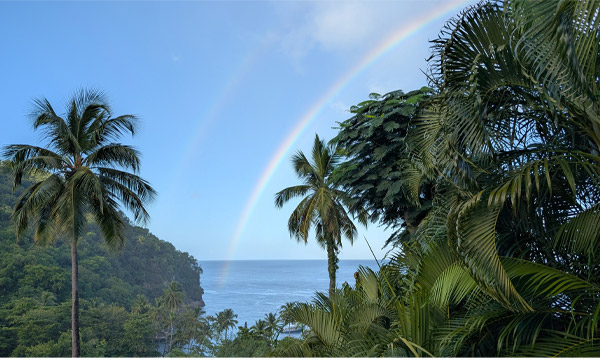
Our delight in St. Lucia began when we first came to the Anse Chastanet on our honeymoon thirty-eight years ago. Its western side cove has an extensive marine reef reserve just off the beach which is ideal for snorkeling, and we are eager to gaze beneath the surf here once again. This enchanted resort has individually designed octagonal shaped suites, which are set in a forested bluff of luxuriant gardens brimming with flowers like pink bougainvillea and oleander, overlooking the sandy sea inlet below. Private balconies have panoramic views, stretching from the steep peaks of the Pitons, across unbroken wild jungle, to an infinity of azure, blue extending out across the ocean.
Every morning after breakfast, we descend the serpentine pathway of steps down past hillside gardens to the palm shaded beach below. Here we choose our daytime base, a thatched roof hut, with cushioned lounges underneath, for our personal belongings. Swimming in this clear ocean, I’m amazed how abundant and spectacular the marine world below the surface is, so I journal each snorkel, recording the fish I see, including unique creatures like eels, hawksbill sea turtles, nudibranchs, octopus and rays.
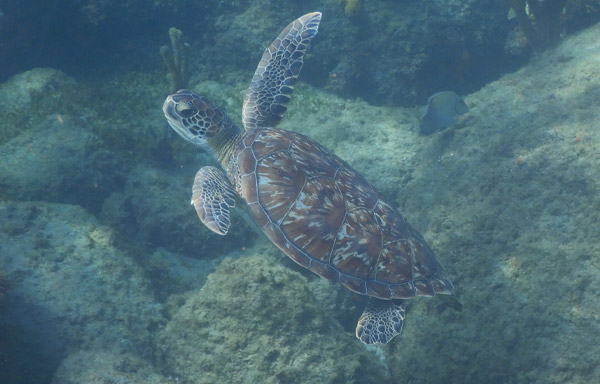
I spot blue tangs, banded butterfly fish, barracuda, brown cromis, cuttlefish, four-eye butterfly fish, flounder, flying gurnard, french grunt, honeycomb cowfish, ocean surgeonfish, parrot fish, sand divers, trumpetfish, sargeant majors, sea snakes, smooth trunkfish, spotted moray eel, triggerfish and urchins. Attached to the reef are tall cylindrical golden sponges, with holes in their middles, soft flexible gorgonian sea fans and rods which wave gently in the underwater currents, and large round brain corals, with intricate grooves and ridges, which resemble a human’s brain. The variety is captivating and fascinating. We’re grateful for tasty midday lunch dishes of ceviche, gazpacho, giant shrimp, kingfish, mahi mahi and red snapper to choose from to refuel our energy for afternoon snorkeling.
Smells in a leafy tropical rainforest are instinctively fresh, with an ambience that feels almost primeval. Flowering trees found in St. Lucia’s rainforest are angel’s trumpet, crape myrtle, frangipani, hibiscus, jacaranda, mimosa, and red ginger, which produce abundant fragrant blooms, most plentiful from December through February, after the rainy season. Wild fruit trees include avocados, bananas, breadfruit, citrus fruits, coconuts, golden apples, guavas, mangos, papayas, passion fruit, pineapples, plums, soursop, starfruit, and tamarind. The impressive foliage of philodendron has large, indented cuts in each broad leaf, while banana tree growth has splits, torn in its wide elongated leaves from flapping in the wind. Classic palm tree foliage sprout from the tops of tall trunks, which explode with individual sprays of long slim pointed leaves. The central stalk of each spray is flexible allowing its long fingering fronds to gracefully bend with breezes and diffuse rain during downpours.
Beach Mamin, along the oceanfront, has impressive stone stacks protruding out of its sandy shoreline. We investigate sparce vegetation growing from the vertical bluff, then follow an alluring path leading into shadowy undergrowth where wild red ginger and hibiscus trees flaunt showy blooms. The cocoa pods, a main ingredient in making chocolate, are unfamiliar growths as are the breadfruit, and the soursop fruit, which resembles a spiky green avocado. Most mysterious of all are the inedible calabash, a grapefruit sized growth, which when hollowed out, make natural cups and soup bowls.
Driving around the island, maximum speed is 20-30 km., as the winding roadways have tight hairpin turns and deep drain channels along the edges, which fill up with rushing water during rainstorms. The dense jungle includes pockets of giant fern trees, banana, and cocoa plantations. Homes in small villages have sprays of brilliantly colourful climbing bougain- villea overflowing in their gardens and when we stop to view the giant pitons, we’re enticed to drive down to Sugar Beach at their base. At the popular sailboat destination of Marigot Bay, we stop at the quaint waterfront for a traditional Caribbean lunch of spicy chicken, plantain, rice, and local dasheen. Circling home along the east side of the island, Dunnery Point and Anse Canot have spectacular ocean scenes, as does the expansive Reef Beach at the southern tip of the island, near the airport.
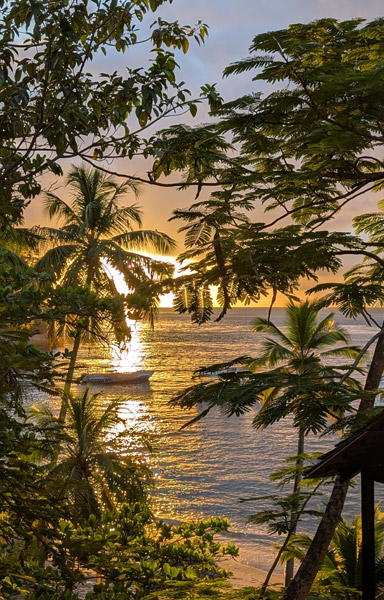
Late afternoons often find us gazing out through feathery palm tree fronds, watching the sunset as it dramatically illuminates the sky and reflects twinkling light off calming sea waters below. Treetop dining at the Anse Chastanet is always exquisite and delicious. One evening we attend a beach party with rum punch and appetizers at sunset, followed by dancing into the night to a live steel drum band. Another afternoon, we board a spacious bi-level dive boat for a jazzy cruise, with live saxophone. Sitting up front, the ocean swells soon calm as we float past secluded beaches and the dramatic Piton mountains, miraculously topped by a full rainbow. The thrilling cruise sentiment lingers with us peacefully gliding across the water through sunset, then ends under a starry sky, with a full moon.
Drifting to sleep each night I have been grateful to be safely protected inside from evening showers. Yet, it’s the calls of insects and chirping crickets, harmonizing with the chorus of croaking frogs and hypnotic ocean waves on the beachfront below, which always creates an enchanting orchestra of jungle melody that lulls me into rejuvenating slumber.
Our final morning, a pair of brilliant double rainbows appear as we look out over the ocean. This idyllic utopia, an enraptured environment of biological wonder, has far surpassed my expectations.
WRITER / PHOTOGRAPHER CYNTHIA PERCIVAL ON THE EAST CARIBBEAN ISLAND OF ST. LUCIA.