
David Milne and his Career Origins There

David Milne, the well-known Canadian artist, is often associated with Group of Seven painters, but actually was never part of them. He is, in fact, noted for his difference in artistic techniques from Canada’s most famous artists – his contemporaries. “The Master of Absence”, as he came to be known, developed a noted technique to reduce a painting to its bare essentials, and he loved doing so using nature as his inspiration. This was one of the reasons he moved to Palgrave, Caledon in 1930.
It was also the height of the Great Depression, and the Milnes were fated to stay married and in the small rural community for the next three years a couple. During this time Milne would produce some of his most seminal work on town subjects, eventually granting him the necessary launching pad to truly establish himself as a noted Canadian painter.
David and Patsy Milnes’ motivation to move to Palgrave were not entirely aesthetic in nature. The economic realities had hit the painter hard. He was unable to sell his work and could afford only to make occasional payments to the couple’s residence and tea shop in Big Moose Lake in Upper New York State. Selling the Big Moose property would give them the capital needed for Milne to focus on his painting and printmaking north of the border in his home country, and live cheaply. “Near the city – but free of it”, as Milne put it. They could even cultivate their own garden. During his period in Palgrave, Milne Also would be forced to take on more traditional work – such as farm labour in exchange for wood and money for art supplies to make ends meet.
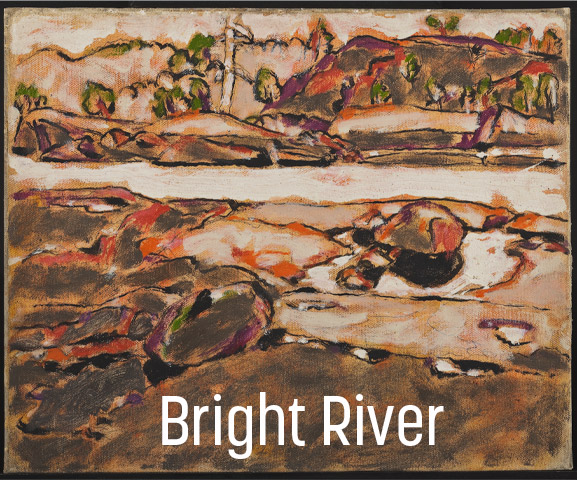
Milne, who worked “en plein air” was, however, seduced by the calm, rural landscape similar to what he had painted during years living in Upper New York State. During this period of three years from March of 1930 to May 0f 1933, Milne would go on to produce over two hundred canvases of the surrounding area, in addition to developing and recording his own art theories, devices, and ideas.
He refined his direction as an artist, which he claimed was always being changed by his contact with nature. The years in Palgrave were “explorations and refinements” with his technique of using formal elements such as colour and line to achieve “aesthetic emotion” always maintaining a connection with the environment observed in his subjects.
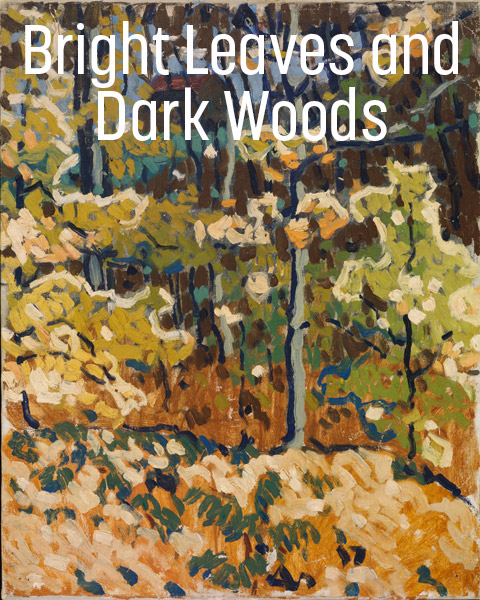
“His work was a distillation of the elements he observed in nature… for example, Milnes wrote to Harry McCurry, curator at the National Gallery of Canada describing how the low sun over the Caledon ridge… occasionally catches the ice on the hills and gives them the thing that makes the charm of silver- extremely high values in the lights and softness of the shadows. Very much in line with my painting problems of the present – the consideration of hue and value as separate things” (Painted in Peel: The Peel Landscape by the Group of Seven & Their Contemporaries).
It was also during this period that Milne would further develop the professional connections with the Toronto art world that would soon fund and propel his career forward as a painter and result in commercial showings by 1934 in Toronto. Most notably, it was from Palgrave that Milne corresponded with H.O. McCurry at the National Gallery of Canada, who brokered the first $175 sale of a major painting to leading art patrons Vincent and Alice Massey.
After separating from his wife Patsy in 1933, leaving her in Palgrave, Milne then relocated via canoe up Lake Couchiching and Severn River. He finally settled at the town of Six Mile Lake near the south end of Georgian Bay, a location only accessible by boat.
It is from here that Milne negotiates a large-scale sale of his paintings- 300 canvases and two watercolours for $1500, which happened to be the collection he had produced mostly during his time in Palgrave. This sale would allow him to continue painting, but what is perhaps more significant is that, despite his express wishes, the Masseys broke up the collection for both exhibition and sale in Toronto. It was these exhibitions and sales that pushed Milne into the spotlight – giving him the needed national and international exposure that would define his career.
All roads – and paintings – lead to Palgrave for Milne.
WRITTEN BY: KIRA WRONSKA DORWARD | PHOTOS: McMICHAEL CANADIAN ART COLLECTION