INGREDIENTS:
- 5 lb bone-in prime rib roast (see note 2 if your roast is a different weight)
- 1 med onion, diced in large pieces (⅓ onion per lb)
- 5 tsp coarse sea salt per pound (1 tsp per lb)
- 2 ½ tsp freshly ground black pepper (½ tsp per lb)
- 5 tsp minced garlic, minced (1 tsp per lb)
- 5 tsp fresh rosemary (1 tsp per lb)
- 5 tsp fresh thyme (1 tsp per lb)
- 2 ½ tsp olive oil (½ tsp per lb)
DIRECTIONS:
MARINATE THE ROAST:
The butcher knows how much fat to leave on the roast, so no additional trimming is generally needed. Your prime rib roast should have a nice layer of fat on top, so it will baste itself. Before marinating, give your prime rib roast a quick rinse with cold water, and pat it dry with paper towels.
Place a flat roasting rack inside a roasting pan large enough to fit your roast, and spread the onions on top of the rack (you can also forgo the rack, and rest the roast directly on the onions). Place the roast in the pan.
Mix the salt, pepper, garlic, herbs and olive oil in a bowl until well-combined. Rub the roast all over with the marinade mixture, coating the surface evenly.
Use plastic wrap to cover the roast, and marinate overnight (at least 8 hours) in the refrigerator. We don’t expect the flavours to penetrate the roast completely, but it will work its way into the fatty collar of the roast.
COOK THE ROAST:
Take the roast out of the refrigerator 2 hours before cooking time, so it’s not stone cold when you transfer it to the oven. Preheat the oven to 450°F, and place your roast on a lower oven rack. You may want to put the roast at the bottom of the oven for the first hour. Placing the oven rack too high up will cause your roast to brown too quickly and burn.
After 30 minutes in the oven, add ½ cup water to the bottom of the roasting pan. The key is to allow the onions to brown and caramelize while roasting, and to prevent the fat/drippings from burning and smoking. Adding the water gradually limits the steam in the oven—you want the beef to roast, not steam.
Turn your roast 180° and cook for another 30 minutes, until it begins to brown. If there is more fat on one side that has not browned yet, make sure you position that side of the prime rib roast toward the inside of the oven.
Once the prime rib roast is browned, lower the heat to 350°F.
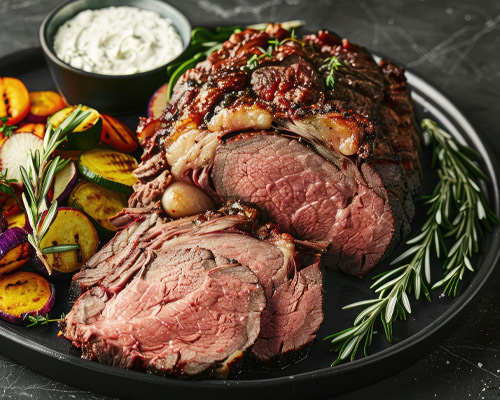
Continue cooking for 90-120 minutes, basting every 30 minutes and adding hot water ½ cup at a time if the roasting pan gets dry. A general rule to approximate roasting time is 15 minutes for every pound, but using a meat thermometer is a must. An internal temperature of 125°F would be medium rare. The roast will continue to cook a bit while it rests on the kitchen counter, raising the temp another 5-7°, so these temperature guidelines have taken that into account.
If the top of the roast starts to char, put a small piece of foil to lightly cover the top, leaving the sides exposed. Again, turn the roast 180° if needed for even roasting.
REST & SERVE:
When ready, set your prime rib on a cutting board or serving platter, and lightly cover it with a piece of aluminum foil to rest for 20 minutes. While the prime rib is resting, pour the pan juices through a fine mesh strain. If there is not enough liquid, add a ½ cup of water to the hot pan, and stir lightly. Pour the juices into a small pot or sauté pan and set aside. Warm up the au jus, and serve alongside the prime rib. You can further dilute it with some hot water to taste if it’s too salty.
TIPS & NOTES:
Note 1: Regarding the number of servings, a prime rib will obviously serve more than 1 person, plan about 1 pound (weighed raw) per person.
Note 2: If you have a very small roast (6 lbs or less), reduce the initial high heat cooking time (450°F) to 40 minutes. Then reduce the temperature to 325°F, and still follow the 15 minutes per pound rule. For a 6 lb roast, you would cook it at 450°F for 40 minutes, then at 325°F for 50 minutes, for a total of 90 minutes. Ovens vary, so be sure to use your meat thermometer to confirm the beef is at your desired doneness