
There is a love affair with the muscle car, and it’s not just in the United States. It’s a global love affair. For over 50 years, the American muscle car has captured the imagination and the desire of hot-blooded men and their need for speed. It’s not just the guys, either. A large population of women are just as enamored with the sound of the engine and the smell of the fuel.
The term muscle car was born in 1966 (coincidently the year after the first Ford Mustang), and Merriam-Webster Dictionary describes it as “a group of American made two-door sports coupes with powerful engines designed for high-performance driving.”
Most people think of the Mustang when they think of a muscle car, but the Mustang, along with other 1960s cars like the Camaro and Barracuda, fell under the term pony car, which was different. The pony car had a short decklid, and a long hood, had manufacturer interchangeable parts, and was affordable.
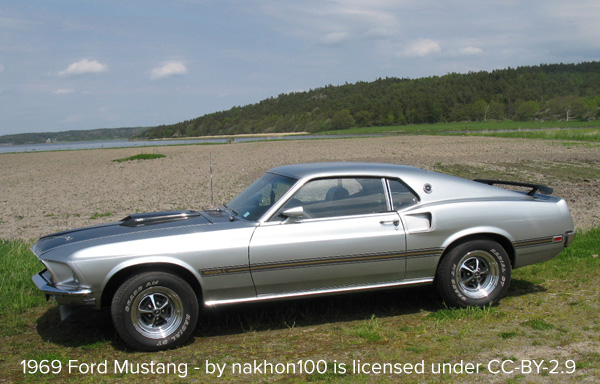
The term muscle car originally applied to drag racing but then became generic for anything high-performance.
Once a pony car was equipped with a high-performance engine, it could be reclassified as a muscle car.
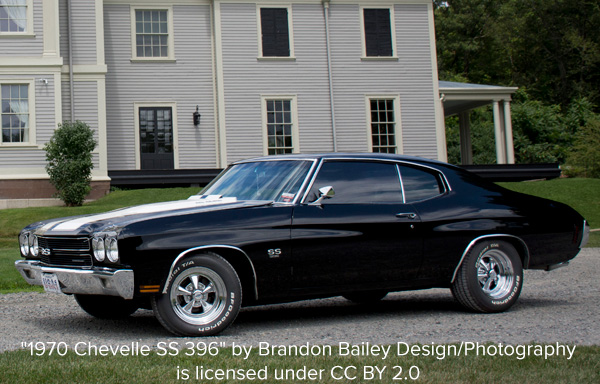
By the late 1960s and early 1970s, every manufacturer had pitched its version of a muscle car into the ring. There was a brand for everyone, from Impalas to Chevelles to GTOs to Thunderbirds to Chargers. If the manufacturers learned any lessons from the pony cars, it was that people were brand loyal.
In the beginning, Ford and GM defined the market with their GTOs and Chevelles, but Mopar dropped high-performance engines into barebones cars, so they could capture the budget-minded crowds. The Road Runner and Super Bee were designed to compete while keeping the price down.
By Definition
No one can definitively say a car is a muscle car since the concept is debatable, but certain characteristics they share are standard:
- The biggest, most powerful V8 that will fit under the hood
- Designed for the drag track, yet street legal
- Rear-wheel drive
- A U.S.-manufactured car between 1964 and 1973
- Usually a two-door mid-sized car
- Affordable with a price tag in the low $2,000 range
These cars were originally given the supercar moniker with and without a capital S, but that name was a throwback from the 1950s when talking about lightweight cars with V8s that were competitive on the drag track. The manufacturers used the term “supercar” to describe the powerful cars of the mid-1960s that they were bringing to market. That term also applied to special edition trim levels in regular production. In the end, the term was discarded for the much more appealing and marketable “muscle car” label.
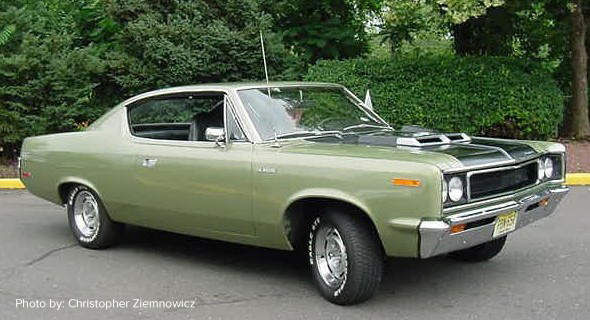
The one thing that everyone agrees on is that the muscle car is derived from the drag-racing world where Mopar and Ford fought every weekend for domination of the raceways. Dodge offered a 1962 Dart 413 that could eat up the quarter-mile in less than 13 seconds, powered by a 413 cu V8 with 420 horses.
A full-sized Ford Galaxie with a 427 cu Ford FE racing engine could do the same quarter-mile under 12 seconds. While it had a fiberglass body, it was a close relative to the street legal Galaxie 427 that did not.
Those who were intently watching what was happening in drag racing could see that street versions of these powerful cars would have mass appeal. To get the public to open their wallets and spend their money on a dream, the manufacturer just had to assign a design team, work out a power configuration, and put a movie star behind the wheel.
WRITTEN BY: JULIE L. CLEVELAND