
It’s a beautiful, warm summer day; and not wanting to waste it, you’ve gathered up your friends, or spouse, 2.5 kids and loyal family pooch to head to that beautiful field you love, filled with wildflowers, to enjoy a wonderful day in the sun. Lounging on a checkered blanket, you laugh as the kids frolic, nibbling at the picnic that you’ve laid out. It’s the perfect idyllic day – that is until some uninvited black and yellow friends decide to crash the party!
The experience is universal. If you have spent any time outdoors in the summer, then you have found yourself the recipient of the unwanted attention of a bee or two. It’s only natural; after all, you’ve invited yourself into their habitat. Wary of their painful stingers, most of us feel nervous when we hear that familiar buzz. Still, it’s possible you’ve planted some wildflowers, willing them to be on your property, from a distance and only for a moment, before they leave to return to their hives. I would wager that few of us have gone as far as thinking to ourselves, “You know, I think I want a whole hive – or five – of these in my backyard.”
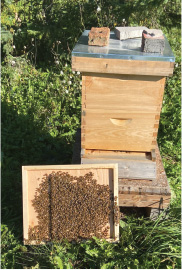
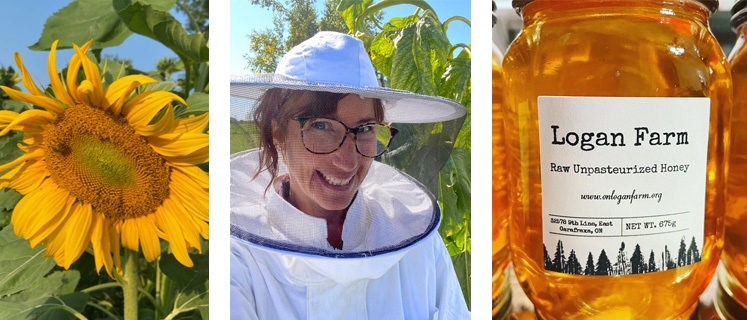
That, however, is what Michele Stone-Logan did. Well, perhaps not exactly what she did; it was the size and location of her East Garafraxa property, combined with the knowledge that previous owners had also kept bees that sparked her interest, but the results are the same. Two years ago, in the spring of 2020, she took a course on bee keeping, and now she is looking at her third year with hives, planning on having at least five hives this year, and fully expects to keep bees for the rest of her life.
While she never opens her hives without all her protective equipment – why risk a painful sting when you don’t have to? – she says she is always very calm when approaching them. In fact, it’s the bees themselves that are a large part of the reward in keeping them. Fascinating creatures, Michele loves watching them, whether it’s collecting pollen in the garden, working in the hives themselves, or just flying in and out. They are incredible, gentle creatures – which might surprise many. The truth is, they are only aggressive when they feel threatened, or a fading Queen causes tension within the hive.
Unfortunately, this past winter, with its cold, high winds and a lack of snow, it was rough on the hives. Of the four hives Michele had last year (a large jump from the single one she kept in 2020), only two survived. While this was obviously disappointing, it hasn’t discouraged Michele or her family. On top of the two to replace the ones that were lost, they’re excited to try a Layens Hive this year. A European design, this hive rests horizontally, holding the frames on one layer with a swinging top. It is believed to be a more natural way to keep bees – which fits right into their process, as they try to keep everything on their property as natural and organic as possible.
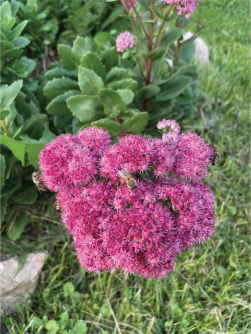
Although their area was already rich in plants and trees that bees love (canola fields abound and a lavender farm essentially down the road), they have been working on researching and growing plants that bees love on their own property as well, such as sunflowers, clovers and borage. Bees can travel 3-5 miles to get to the plants they want, but this tires them out, which can decrease the overall health of the hive. To further advance their own bees, Michele and her family have also added a greenhouse this year, allowing them to grow even more plants – which as mentioned they grow organically, with no pesticides and a “back to Eden” gardening approach.
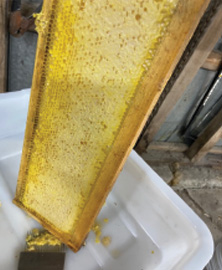
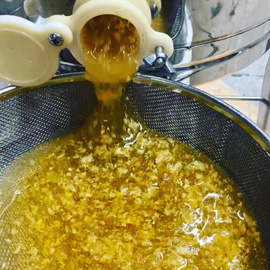
As for their honey, natural and unpasteurized, it is for sale; their ‘business’ (which is currently a hobby, or ‘side hustle’ as both Michele and her husband still work full time jobs), is considered ‘farm gate selling’. This means that a lot of their purchases come from friends, family and acquaintances. They do have a website, where honey and the honeycomb beauty products Michele makes can be found, though a word to wise, they do sell out quickly.
The truth is, there are a lot more to bees than we often give them credit for, and they go far beyond our basic caution for their painful stings. You don’t need to go all out as Michele did and start keeping them in your backyard, but next time you see a bee, take a moment to consider where it came from – and maybe, if you’re interested, find a course to learn more about bee keeping yourself. Michele will be the first to tell you it is more rewarding than you can imagine.
WRITTEN BY: JILLIAN KENT | RESOURCES: MICHELE-STONE LOGAN, LOGAN FARM | www.onloganfarm.org